
As Nowruz gets underway this spring, I'm transported back to my 2005 overland journey through Iran. While the country faces profound challenges today—including the ongoing conflict—the enduring spirit of Nowruz, the ancient Persian New Year, remains a beacon of hope and renewal.
Here's how the festival unfolded for me amid the beauty of Isfahan, a city and celebration that shattered every preconception I had about visiting the country, turning a stop on the Silk Road into one of the trip's most memorable highlights.
Arrival and First Impressions
After leaving Tehran, we drove 260 miles south to Isfahan—a six-hour journey through dramatic landscapes of desert scrubland, rugged hills, and snow-capped mountains which defied every preconception; far from a flat wasteland, its central plateau unfolded with constant views of majestic ranges.
We arrived into Isfahan (known as "Nesf-e Jahan" or "Half the World" for its beauty) just as the Nowruz festival reached its climax. It buzzed with families picnicking on every patch of grass, where blankets were spread, feasts shared, and laughter echoed around the city. We'd seen the same with roadside gatherings on the drive down, where families reclaimed public spaces to mark spring's arrival.
A Warm Welcome in the Heart of the Square
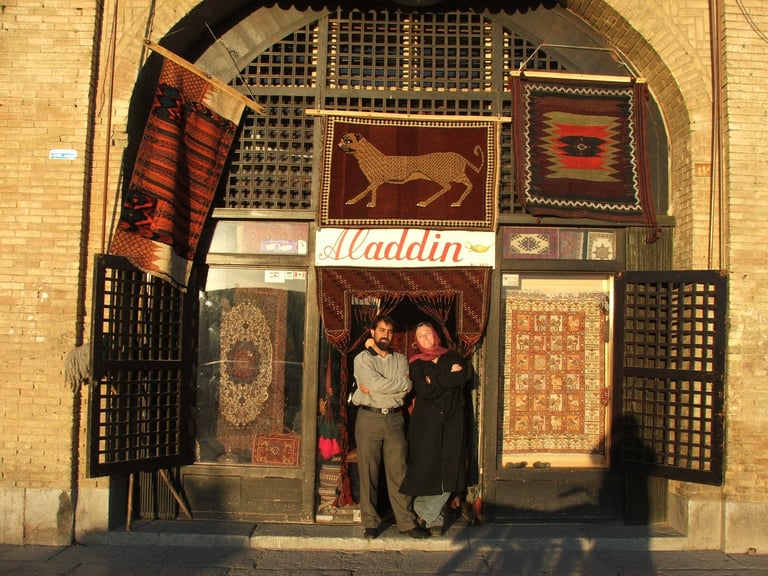
Our base in the city became Aladdin's carpet shop, situated in one of the two-storey arcades framing Naqsh-e Jahan Square (the world's second-largest after Tiananmen), built in the early seventeenth century by Shah Abbas I. Saeed Mesbah, the charismatic owner (who resembled Al Pacino from his role in Carlito’s Way), welcomed us like family over endless tea. His cosy shop, filled with woven rugs and stories, became our home away from home.
The day coincided with the final stretch of Nowruz, which is rooted in Zoroastrian traditions dating back over 3,000 years. It celebrates spring's renewal at the vernal equinox ("new day"), culminating in Sizdah Bedar—when families picnic outdoors to shake off bad luck. Rituals include fire-jumping for purification (echoing Chaharshanbe Suri earlier in the festival) and the Haft-Seen table, where seven symbolic items starting with "S" are placed for prosperity and rebirth.
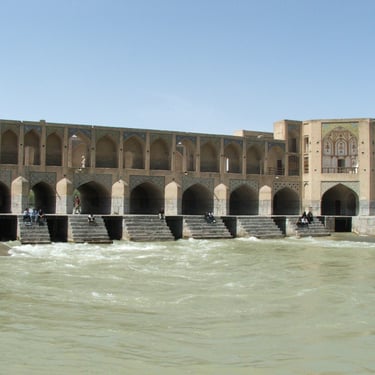
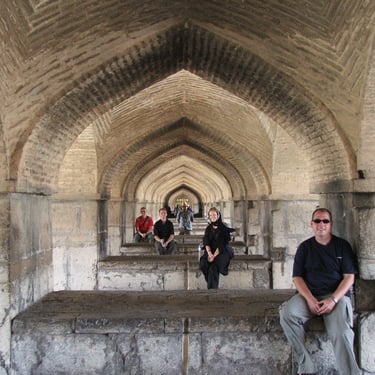
After more tea, Saeed squeezed all six of us into his tiny car and drove us to the Zayandeh River, where the Si-o-se Pol (Bridge of 33 Arches) spanned the water in elegant stone. From there, he invited us to join him and his family for a gathering outside town to celebrate Nowruz. Around 40 of his relatives welcomed us openly, treating us to garden games of volleyball and dodgeball, followed by a feast of kebabs and rice. As night fell, a bonfire was built—flames leaping several feet high—and one by one, we jumped over it, purifying ourselves in the ancient ritual. It was profound hospitality, shattering any apprehensions about Iran and its people.
Treasures of Isfahan Amid Renewal
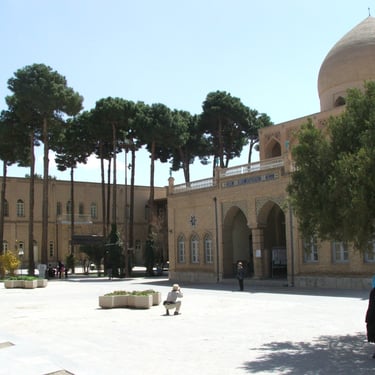
The next day, Saeed guided us through the city's wonders. We admired the river bridges, then visited Vank Cathedral in the Armenian quarter—a seventeenth-century blend of Persian and European styles. Its frescoes and museum chronicled the Armenian community's history, including the 1915 genocide by the Ottoman Empire (often called the Armenian Holocaust), which saw around 1.5 million deaths through massacres, deportations, and starvation. Survivors found refuge in Persia, with communities like Isfahan's Julfa quarter established by Shah Abbas I in the early 1600s for their silk-weaving skills. The exhibits, detailing photos of refugees, lost villages, and artefacts, brought the tragedy's weight home.
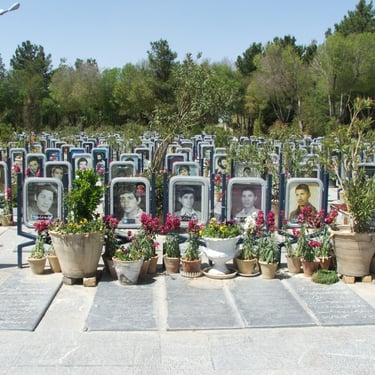
We paid respects at Golestan-e Shohada, the vast cemetery for martyrs of the 1980-88 Iran-Iraq War, with 25,000 graves marked by portraits of young men. Saeed's personal connections here added a profound layer to the grief.
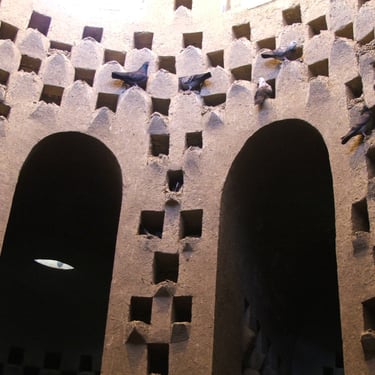
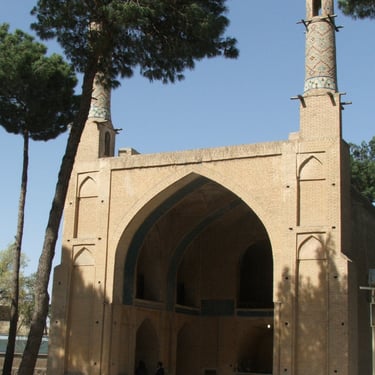
Other stops included a pigeon tower (a Safavid-era structure collecting guano for fertiliser), a tea house under Si-o-se Pol's arches (sipping tea overlooking the river), Menar Jonban (also known as the Shaking Minarets—though they didn't sway for us), and a hike up Atashgah (Fire Mountain), a Sassanid Zoroastrian fire temple with panoramic views.
The Imam Mosque and Bazaar
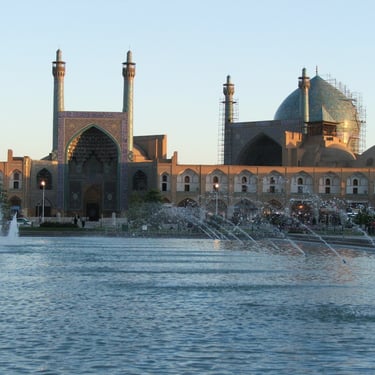
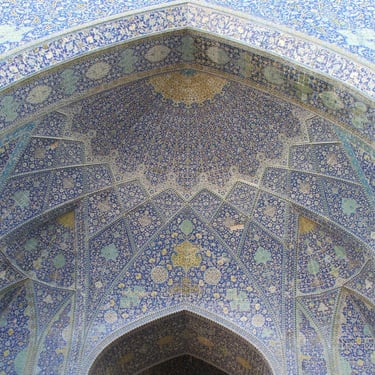
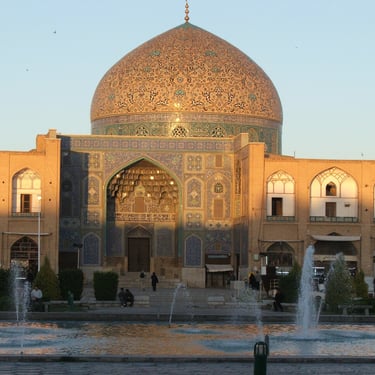
Our final day in the city was relaxed. We lounged at Saeed's shop, then explored the Imam Mosque (Masjed-e Shah until 1979)—a seventeenth-century masterpiece of turquoise and cobalt tiles, soaring domes, and calligraphy. Its acoustics amplified whispers across the vast prayer hall as sunlight illuminated swirling patterns. We also visited the Sheikh Lotfollah Mosque on the square's eastern side.
In the Grand Bazaar—a Safavid-era labyrinth—we browsed spices, jewellery, and ceramics, where I added some souvenirs of colourful bowls and a hookah pipe with coals and flavoured tobacco to relive the magic at home.
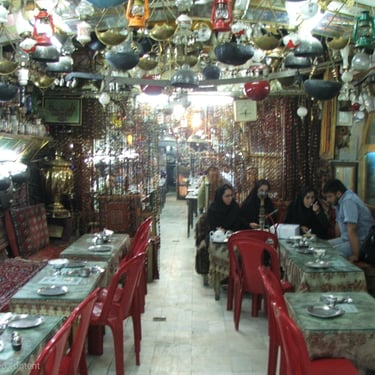
Lunch in a hidden tea house was an authentic experience unchanged for centuries: hanging lanterns, brassware, samovars, cushions, and carpets, all adding to the atmosphere as locals chatted over hookahs.
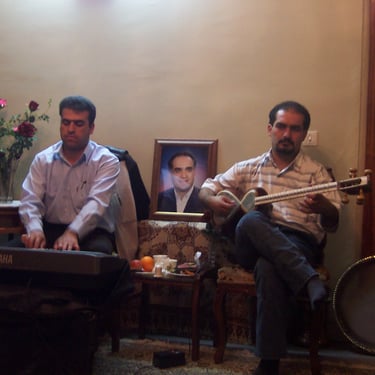
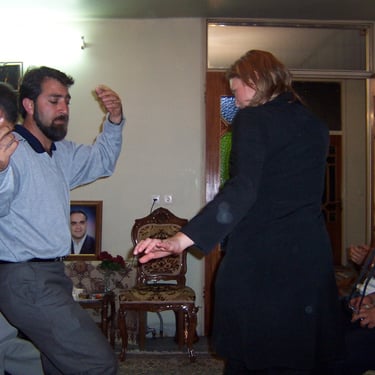
Evening brought a joyous dinner, with Saeed once again welcoming us into his life at one of his friends' houses, where music on setar and daf drum provided the entertainment while we danced past one.
What Stays With Me
When I recall my journey during Nowruz in 2005, it's not the beautiful architecture of the city that comes to mind, though the blue tiles and bridges did mesmerise. It's the bonfire jumps, family laughter, tea house intimacy, and the shattering of stereotypes.
Bidding farewell to Saeed felt like leaving family. His generosity transformed our visit, proving Iran to be a land of beauty and kindness—far from the tense image I'd expected from the news we are fed back home.
Travel often delivers beauty; occasionally it delivers a connection that feels like family, and I now worry for the ordinary people like Saeed, his family and friends who are caught in the crossfire and are trying to take back their beautiful country. My hope is the war ends quickly and leads to a more peaceful Iran that can show its true colours and once again welcome the world.
If this has you itching for more, check out the dedicated page for my upcoming book detailing this trip
Kathmandu to Kent
And be sure to sign up for the newsletter below to receive updates on my writing and the book launch.
By signing up, you'll also gain access to a PDF version of the Nepal chapters of Kathmandu to Kent.