
The Eve of Holi: A Village Welcome
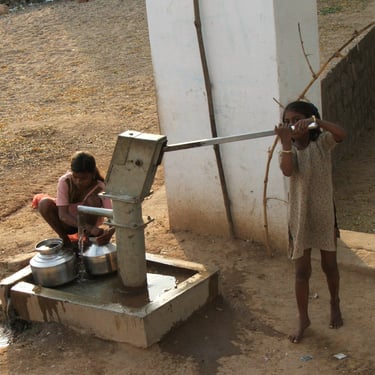
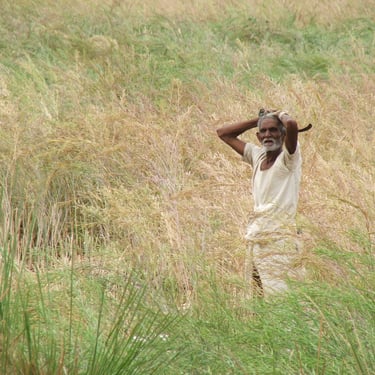
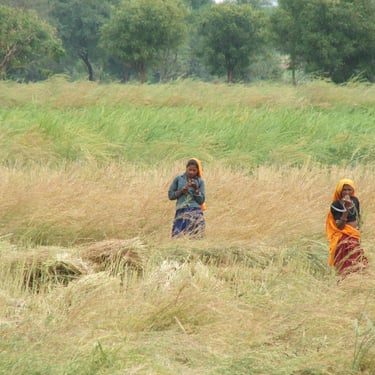
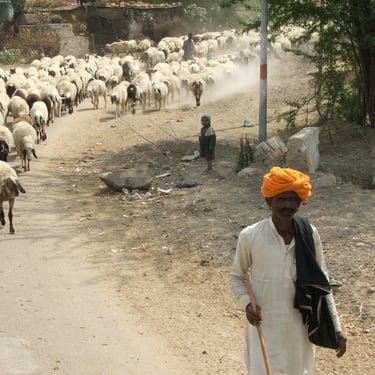
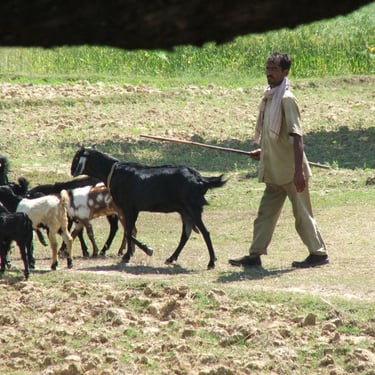
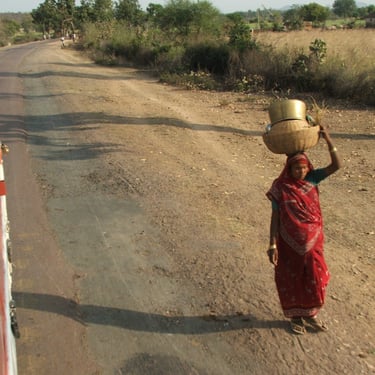
Dawn on 25 March 2005 broke as we left the hill station of Mount Abu in Rajasthan, heading south through sun-baked plains dotted with acacias and distant villages to Mandu, a medieval ghost city in Madhya Pradesh, roughly 250 miles away. The heat intensified as we descended to sea level, and through Archie’s windows, glimpses of rural life unfolded: Women in vibrant saris worked the fields; bullock carts creaked along dirt tracks; children darted barefoot between mud huts, while young girls fetched water from village wells. India, as it has been for centuries.
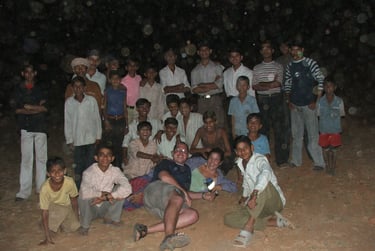
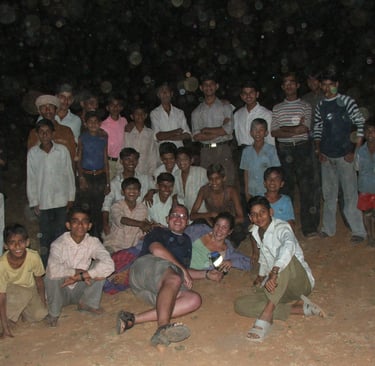
Fifteen minutes later, the scout returned, this time with the whole village in tow: women in saris at the back with shy smiles, men in turbans and dhotis leaning in, and children peeking from behind legs. Shy at first, they soon warmed up as we chatted in our halting Hindi using hand gestures more than words. Before long, we had them in the palm of our hand, posing for group photos like a classroom yearbook picture.
Our time with the village lasted several hours; it was one of the purest encounters of the trip. No hawkers. No agenda. Just shared curiosity. By ten o’clock they melted back into the night to start their Holi celebrations with drums and bonfires, leaving us with a sense of unfiltered warmth.
Holi Dawn: Drums, Dye, and Roadblocks
Sleep was light. At six the next morning, rhythmic drumming and lilting song crept through the walls of our tents. Peering out, we saw a handful of villagers from the night before had returned, faces dusted with gulal (coloured powder), serenading us into this new dawn. We clapped along groggily as they dispersed into the mist—a surreal, touching experience that started a day I will never forget.
Holi, one of Hinduism's most joyous and ancient festivals, marks the triumph of good over evil and the arrival of spring. It traces its roots back over two millennia to texts like the Puranas, and at its heart lies the legend of the demoness Holika, who tried to burn the devoted young Krishna worshipper Prahlad on a funeral pyre, only to be consumed by the flames herself.
In memory of this, the night before, bonfires are lit and drums played to banish the last of winter; but come dawn, the real revelry begins: people hurl coloured powders and water, covering everybody—and everything—symbolising forgiveness and renewal, often while enjoying sweets and thandai (a milky drink sometimes laced with bhang from cannabis leaves).
For Indians, Holi is far more than a public holiday. It's a rare moment when caste barriers dissolve, families reunite, and even the most reserved souls are given full permission to be joyfully, gloriously chaotic.
I knew none of this, in any meaningful depth, until I lived it from the road.
Excited by our unique wake-up call, we broke camp early to head to Mandu. But eight miles in, we hit the first roadblock of rocks and felled trees manned by drunken or high (or both) locals demanding a "toll". Fuelled by local moonshine like tharra, these makeshift barriers turned roads into mischievous gauntlets. At this first one, glassy-eyed teenagers wedged rocks under Archie's tyres and threatened smashed windows unless the toll was paid. We all jumped out and got involved, forming a human chain around Archie’s wheels as he edged forward inch by inch until we eventually broke through.
Five miles later, another roadblock. This one only being manned by small children requesting sweets to pass.
By late afternoon, we found a flat, grassy spot reminiscent of a village green back home and began setting up camp. As we did this, a lone motorbike rider appeared, watching us silently from a safe distance before riding off.
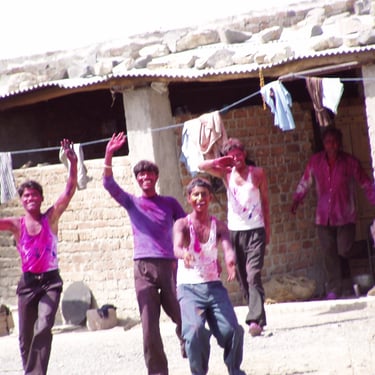
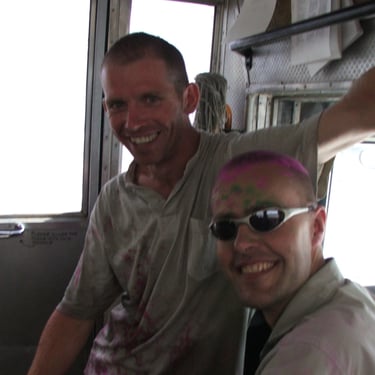
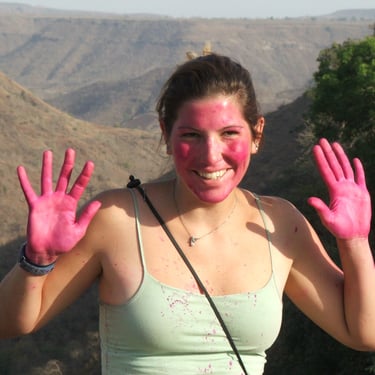
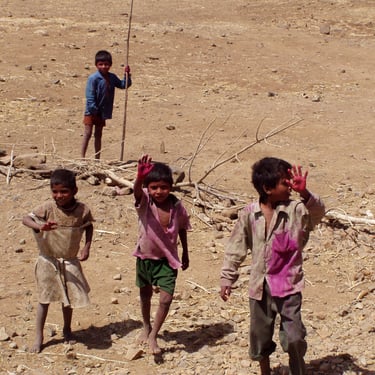
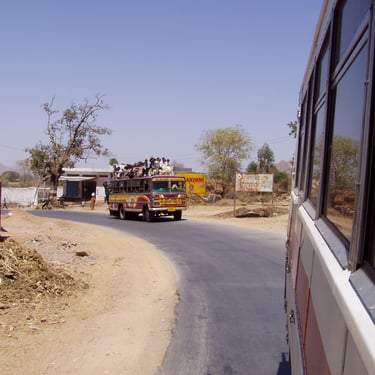
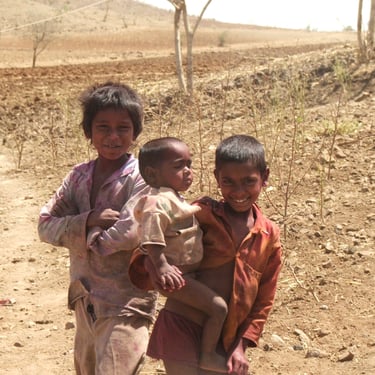
And so the day unfolded. Most were friendly, with giggling kids after sweets; others required a few rupees. Sometimes we stayed inside Archie’s protective shell and paid the small fee. Other times we climbed down and joined in. Each time we emerged, we were bombarded with colour.
Around halfway to Mandu, we stopped at a roadside dhaba for lunch, the staff's kurtas splashed with rainbows. A brief truce was thankfully called while we enjoyed our meal in relative peace.
Archie himself bore the brunt: his white sides disappeared beneath splashes of fuchsia, purple, and green, hit by pichkaris (water guns loaded with coloured liquid) wielded by jubilant revellers from the roadside verges.
The rest of the day unfolded in that same rhythm—tension, laughter, relief, colour.
As we neared Mandu, one final heated exchange erupted after we clipped the edge of a shiny new rickshaw belonging to a rather inebriated group. Accusations flew as thick as the powder still drifting in the air, a handful of rupees eventually smoothing everything over as we rolled on.
By dusk, after clearing 25 roadblocks, we pulled into the grounds of a hotel near Mandu to set up camp for the night. We were tie-dyed from head to toe in some sort of weird experiment that hadn’t quite worked. Exhausted but exhilarated, the day had been chaotic, occasionally tense, but truly unforgettable.
Mandu: A City of Echoes
Sunday morning arrived with a faint dusting of Holi powder still clinging to our clothes. We spent the morning exploring Mandu itself—a fifteenth-century ghost city perched dramatically on a high plateau above the Nimar valley, surrounded on three sides by deep ravines. Founded as a Paramara outpost in the sixth century, it reached its peak under the Malwa Sultanate, whose Afghan rulers built over a hundred monuments blending Persian domes with Hindu stonework.
We roamed the echoing halls of Jahaz Mahal, the Ship Palace, its long sandstone form floating above a narrow moat like an upturned boat, morning light slanting through arched vaults. Nearby, the Champa Baoli stepwell descended in ornate sandstone layers to a pool of water that may—or may not—have been tinted green with leftover Holi dye. Ruins lay scattered across the plateau like oversized chess pieces: victory towers, cracked domes, walls surrendered to weeds and whispers.
Then we were back on the road again for another 200 miles towards Ellora, this time with a handful of gentler roadblocks along the way, mainly staffed by wide-eyed children in dye-stained clothes, waving with hands streaked in a dozen colours.
Holi Then and Now: From Wild Roads to Regulated Revelry
Looking back two decades later, I realise we experienced Holi at a particular moment in time.
In 2005, it often felt like anything went. Powder was thrown without question. Water was sprayed at will. Roadblocks were improvised. It was anarchic, sometimes intimidating, and occasionally verging on unsafe.
Since then, Holi has tightened its belt.
By 2025, stricter regulations emphasise consent: throwing dye or water without permission can lead to fines or jail under anti-harassment laws. The toxic chemical gulal is banned under the Environment Protection Act, replaced by organic alternatives that spare skin and waterways. In places like Mumbai, midnight noise curfews curb DJs, while motorbike rallies—once chaotic splash zones guzzling thousands of litres of water—are prohibited, especially in water-stressed areas like Delhi or Rajasthan, where they exacerbated shortages and clogged drains.
These changes keep traditions alive while minimising fallout, but I suspect the raw, unfiltered experiences we had on those rural roads might be a thing of the past.
Some might say this sanitises the festival. I prefer to think it preserves it. I just hope the core of Holi—renewal, forgiveness, and shared joy—remains intact.
What Stays With Me
When I think of Holi 2005, it is not the tension at the barricades I remember first.
It is the drumming at dawn.
The shy smiles in the twilight circle.
The rainbow-streaked chai wallah.
The way India seemed, for a day, to suspend its hierarchies in laughter.
Travel often gives you monuments and landscapes. Occasionally, it hands you something wilder: a festival that engulfs you whole.
Holi did exactly that. And I'm glad I was there for it.
As Holi approaches this March (with Holika Dahan on 3 March and main celebrations on 4 March), I'm reminded of my own brush with the festival's vibrant madness back in 2005. During an epic journey with Dragoman Overland, I found myself right in the thick of it as we drove through rural Madhya Pradesh in a rugged off-road Mercedes truck known as Archie. What started as a routine push towards the ancient ruins of Mandu turned into a weekend of roadblocks, powder bombs, and unexpected hospitality.
I had no idea what I was in for.
If this colourful tale has you itching for more, check out the dedicated page for my upcoming book
Kathmandu to Kent
And be sure to sign up for the newsletter below to receive updates on my writing and the book launch.
By signing up, you'll also gain access to a PDF version of the Nepal chapters of Kathmandu to Kent.